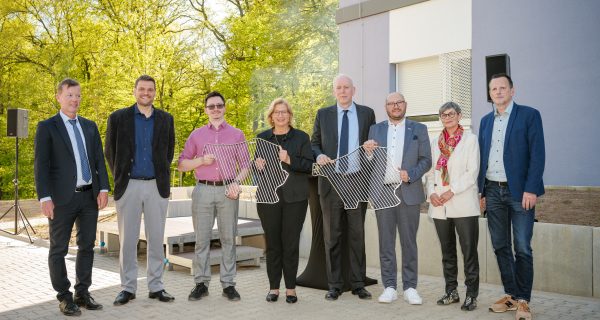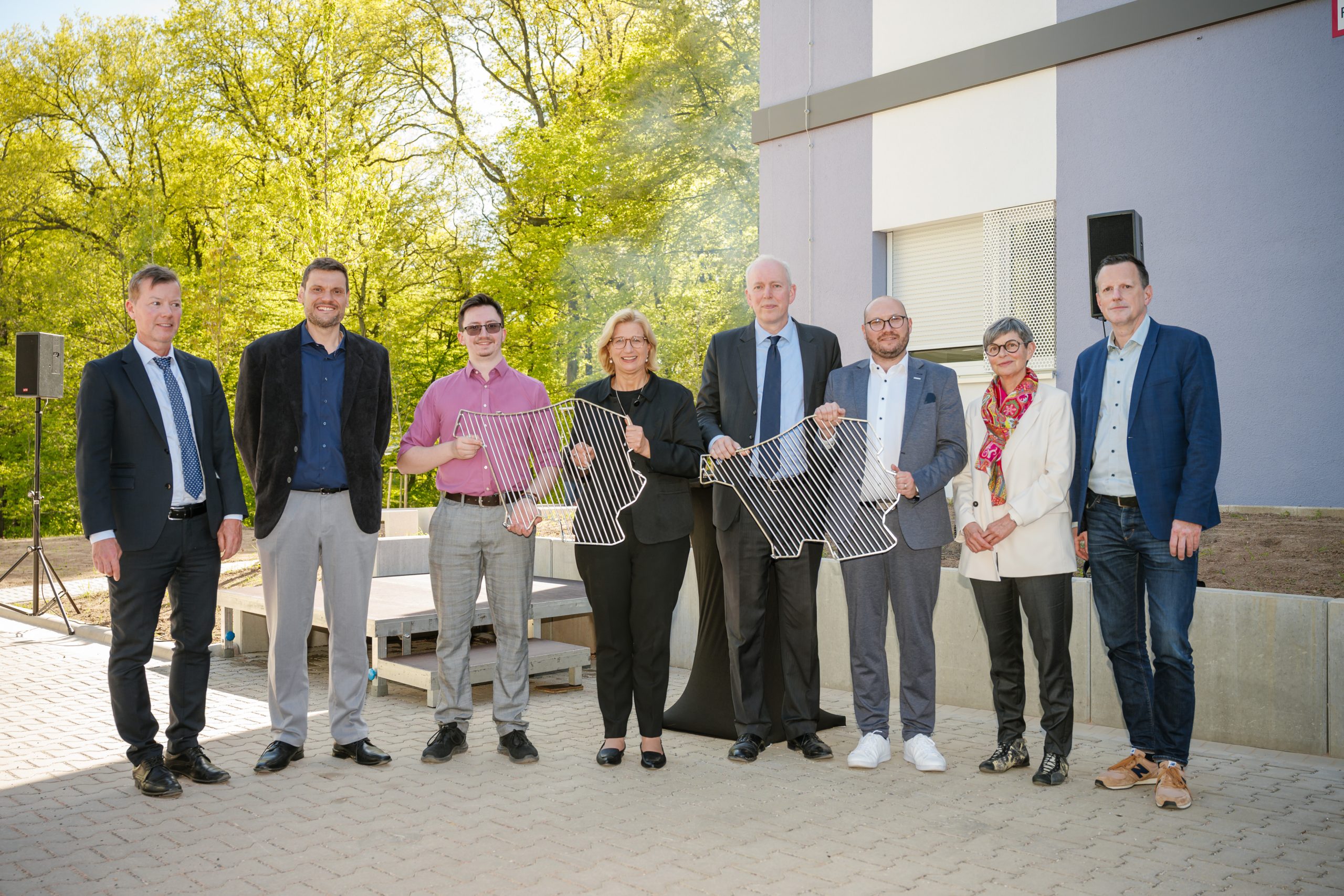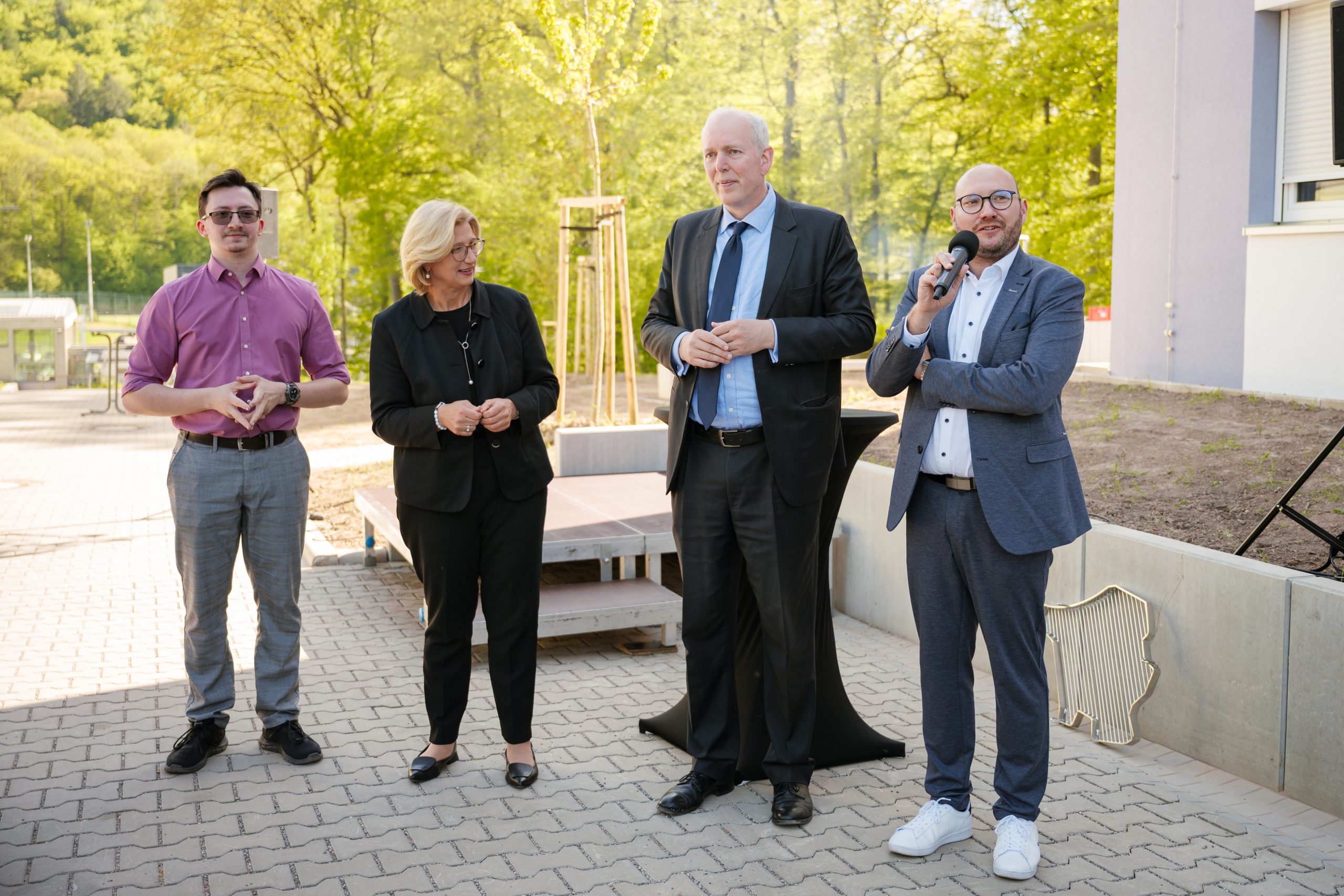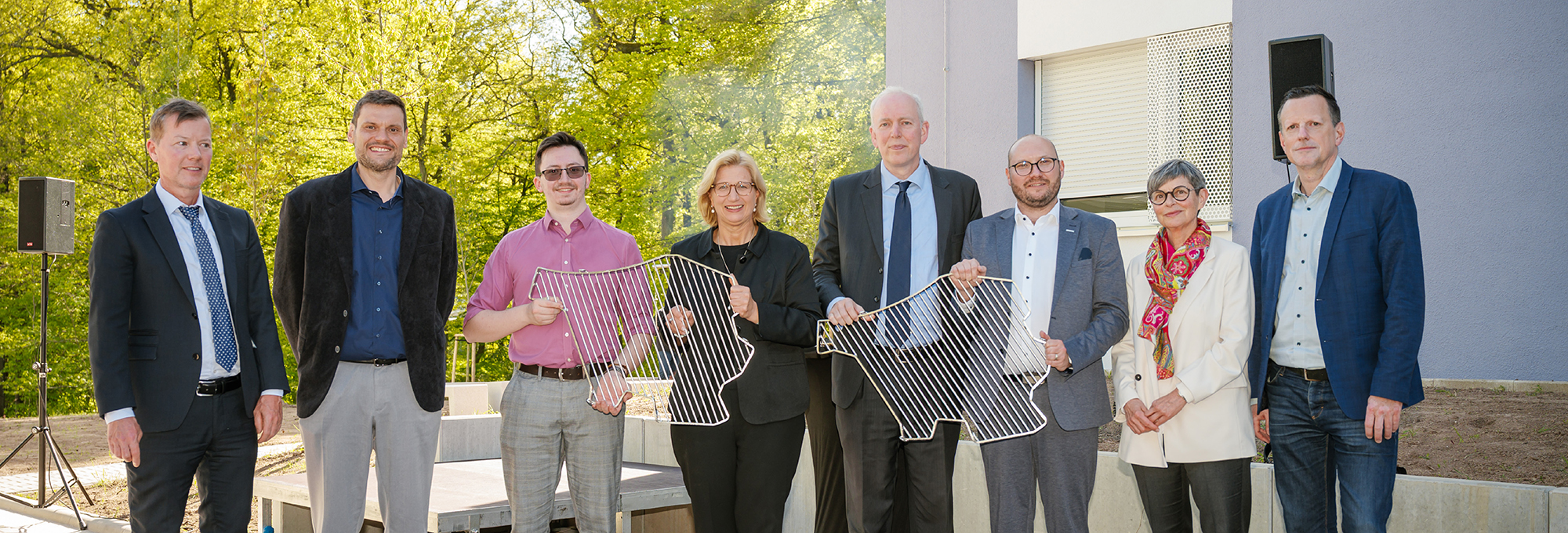
Six months earlier than planned, the first students have moved into their apartments in one of the three new student halls of residence on the university campus in Saarbrücken. The Ministry of Finance and Science and WOGE Saar held a joint barbecue afternoon to welcome these new residents on 24 April. This event also served as the official opening of the student halls on campus, with a total of 234 housing spaces. Minister-President Anke Rehlinger was there to welcome the attendees in person. She, together with Minister of Finance and Science Jakob von Weizsäcker and CEO of WOGE Saar Mirco Bertucci opened the event with a brief welcoming address.
She emphasised: ‘You need more than just a place on a course in order to begin your studies! Given this, we are creating not just new housing, but also a place that people can call home, where they can live and feel at ease. The result is a campus that plays host to both study and daily life and provides the ideal setting for appealing studies. Campus 1000 will therefore become a community hub and a genuine destination for current and future students. This strengthens both this location as a hub of research and our state as a whole.’
‘The idea of Campus 1000 is a very simple one: people who learn, live and celebrate alongside their fellow students experience more successful, enjoyable studies. Strangers become friends’, Minister of Finance and Science von Weizsäcker understands. ‘The university campus is gaining a new residential area to house our professionals of the future. The first 234 housing spaces were completed significantly earlier than originally planned, thanks to exemplary collaboration between all the stakeholders involved. We will be continuing in the same vein.’
Although Minister of the Interior, Construction and Sport Reinhold Jost was unable to attend, this project is very close to his heart:
‘By reorienting social housing assistance and a reliable legal framework for building activities, we have put social housing construction in Saarland back on track. These new student halls of residence show that these measures are taking effect. Additional student halls also ease the burden on the general housing market, providing much-needed relief for other people seeking accommodation.’
What other attendees had to say:
Mirco Bertucci, CEO of WOGE Saar:
‘We are proud to have not only completed the largest construction project of its kind in the state in the form of our three state-of-the-art student halls of residence, but also opened up lettings a whole semester earlier than anticipated. WOGE remains a key player on campus, as the landlord of the existing halls and the developer of the additional buildings planned.’
Dr. Roland Rolles, Vice-President for Administration and Finance at Saarland University:
‘We are delighted that three new student halls of residence right on campus are ready for occupation. Affordable housing options are vital for students who are interested in embarking on a course of study at Saarland University. The halls of residence will also help to further boost the amount of student life that takes place on campus, and – alongside university sport – will make this a very popular part of campus.’
Carsten Rast, Studierendenwerk Saarland board member:
‘We have been helping students find affordable housing in Saarland for generations. We set great store by high quality standards and efficient structures. We have combined forces with WOGE to create what is needed to ensure that students continue to have access to good, financially feasible accommodation in the future.’
Cedric Bender, Chair of the University’s Student Union:
‘Students beginning a course of study do not just need a place on the course, they also need somewhere to live. These new student halls opening right on campus are therefore a vital, long-overdue step. At a time when housing markets are strained, this makes things significantly easier for many students. For us as a student union, it is crucial that the campus is not just a place for learning but also somewhere you can settle in and feel at home.’
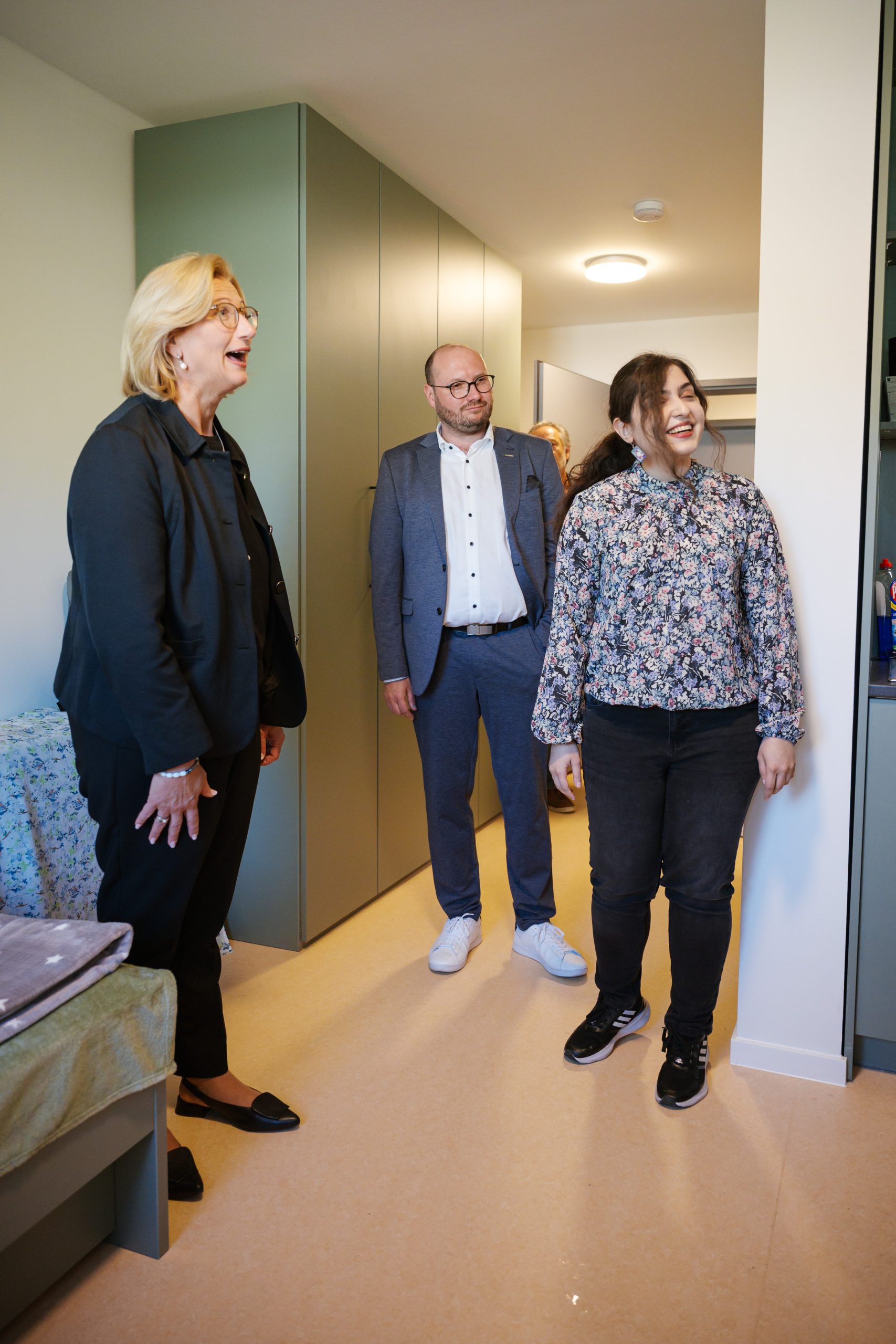
Touring the apartments
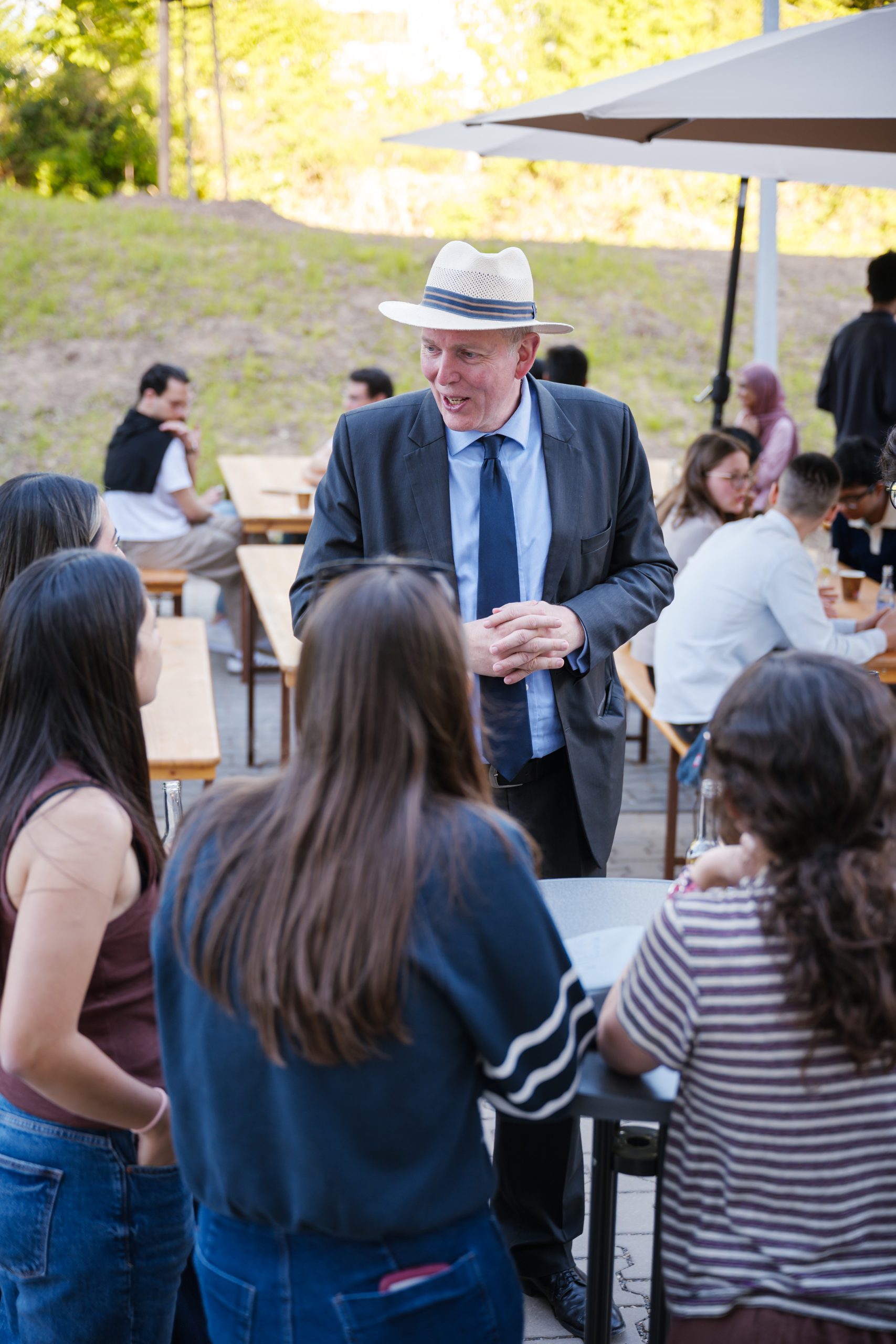
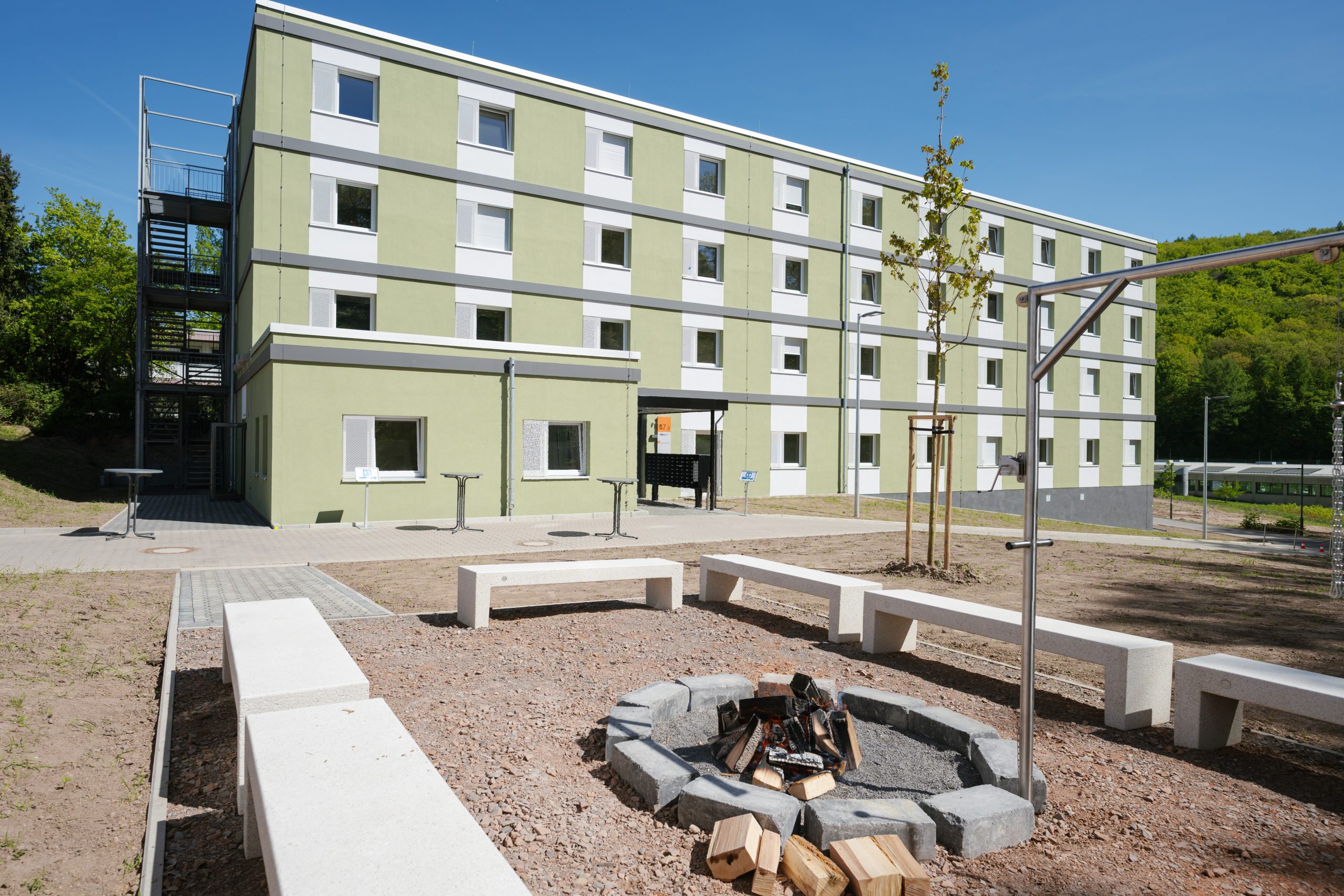
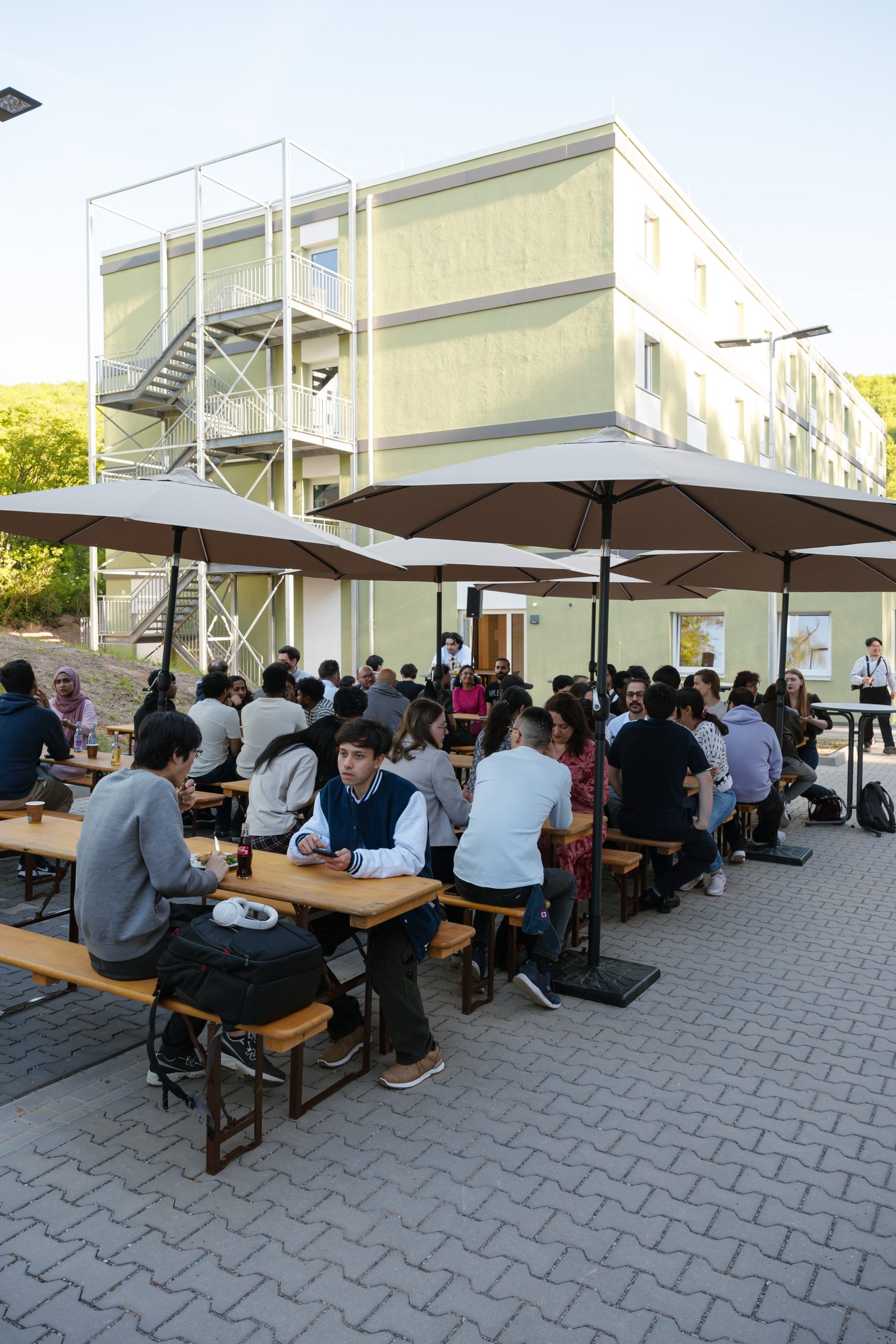
The event was held in the barbecue area between building 1 and building 2, with attendees enjoying a relaxed atmosphere. Around 80 students (many of whom were international) came along. There was a lively atmosphere with some delicious sausages on offer – and the residents were able to chat about their first impressions of life in the new halls of residence.
25-year-old Iranian Maryam Hosseinali, who is continuing her computer science studies in Saarbrücken, emphasised how happy she was to have found a space here and received comprehensive support so quickly. She particularly liked that the halls are so close to the lecture theatres, with lots of natural settings nearby.
She is one of the students who opened their apartments up for visitors to see. In return, these welcoming students received a voucher for the campus market – a small supermarket near the campus centre that sells snacks, stationery and fresh food.
These new halls of residence, just a few minutes’ walk from the cafeteria, library and lecture theatres, are the first new student housing buildings to have been built on campus since 1989. They offer 234 housing spaces (in the first phase of construction). After 472 enquiries in total, 147 tenancy agreements were signed to begin on 1 March.
The arrival of students at these new halls of residence on campus is the first milestone in the Campus 1000 project.
About Campus 1000
This joint project between the university and the state is seeking to create more than 1,000 modern, affordable housing spaces for students, with the first two phases of construction being overseen by state-owned WOGE Saar. Minister von Weizsäcker’s initiative plans to create these on or very close to campus – with the clear benefit of short routes between housing, learning and research spaces.
The state is therefore systematically reinforcing student housing provision, whilst also boosting Saarland’s attractiveness and international competitiveness as a university location.
New housing, rapidly built
WOGE Saar completed three virtually identical halls of residence, with a total of 234 housing spaces or 226 apartments, in December 2025 (buildings 1 and 2) and January 2026 (building 3) – some six months earlier than planned.
Ground was broken just over a year after the initial concept was drawn up. This required various agreements between the responsible Ministry of Finance and Science and Saarland’s residential property company WOGE Saar, Saarland University, the Ministry of the Interior, Construction and Sport (which provided accompanying infrastructure measures), and the state capital Saarbrücken. The first students have been able to move in this spring, only around a year and a half after construction began. This means that new student housing has been made available remarkably quickly – highlighting the project’s high priority and the implementation skills of all involved.
Buildings and letting
Each building has one wheelchair-friendly apartment and six accessible apartments on the ground floor. All of the other apartments on the three upper floors are accessible via a lift and sufficiently wide corridors. The ground floor contains common rooms, utility areas and other one-bedroom apartments. Building 3, the southernmost building, has eight double apartments designed for couples. Each hall of residence has a generous common room equipped with sofas and a kitchen.
The buildings are owned by WOGE Saar. Lettings are conducted in close collaboration with Studierendenwerk Saarland, who are responsible for application management, whilst WOGE Saar serves as the landlord and point of contact for all matters relating to rental agreements and ongoing operations. The cost of basic rent for a single apartment is around 275 euros, or around 550 euros for a double apartment.
Investment
23.5 million euros of investment (after funding is deducted) is being provided by state-owned WOGE Saar. The apartments received funding from state and federal resources via the Saarländische Investitionskreditbank (SIKB). The federal government contributed around 9 million euros and the state 2.7 million euros to the project.
Outlook
Planning is underway for other housing developments: the second phase of construction, located north of the initial site, is expected to provide another 306 student housing spaces. Planning application was submitted in November. A general contractor will be appointed shortly after planning permission is granted. The aim is to begin construction work in late 2026 and finish by 2028. This and the initial phase of construction should create a total of 540 new student housing spaces on campus.