The PACT-H2 project – led by the Saarland Hydrogen Agency H2Saar and involving 27 partner institutions from Germany, France, Belgium and Luxembourg – has been approved for European Union funding. This three-year project will receive a total of three million euros.
The ‘Projet d’Acceptabilité et de Coopération Transfrontalière pour l’Hydrogène’ (‘Transnational Project on Hydrogen Acceptance and Cooperation’), known as PACT-H2 for short, is seeking – in the context of current economic transformation processes – to strategically coordinate hydrogen-related activities in the Greater Region and improve their social acceptance.
The total funding amount is around 3 million euros. Of this, 1.7 million euros will now be financed by the European Regional Development Fund (ERDF), another 0.5 million will come from the Saarland Ministry of Economic Affairs, and the remainder will be covered by co-financing and equity capital from the project partners. The project will be led by H2Saar and IZES (Institute for Future Energy Systems) with 25 partner institutions from the Greater Region, including LuxMobility (Luxembourg) and Pôle Véhicule du Futur (France).
Dr. Bettina Hübschen, CEO of H2Saar: ‘PACT-H2’s approval means that we are tapping the full potential of the Greater Region. Right from the outset, we have been shaping a cross-border, integrated hydrogen economy – following a European approach. Acceptance by the general population and relevant target groups is a key factor in this success. By aligning regional strategies and interlinked governance measures, we are helping to create a stable framework for ramping up the hydrogen economy across the entire Greater Region.’
Minister of Economic Affairs Jürgen Barke: ‘The EU’s funding approval is good news for the entire Greater Region. Hydrogen is the key to security of supply, stable pricing and climate protection. Crucially, the ramp-up is a cross-border affair. This provides the foundation for a strong European hydrogen ecosystem with good prospects for growth, employment and cheap energy.’
Hydrogen use and generation play a major role in the energy revolution and in achieving climate goals, plus are hugely important to the Greater Region due to its industrial structure. As a result, cross-border collaborations to establish a regional ecosystem play a vital role, as does networking, coordinating and harmonising hydrogen activities across the Greater Region. As well as industrial policy decision-makers, it will also be important to provide the general public with comprehensive information about the positive impact of a hydrogen economy ( e.g. for the labour market) and improve general acceptance of associated projects.
Across three work packages (WPs), PACT-H2 will be seeking to map out similarities and differences in the regions’ strategic and communicative approaches and create solutions for targeted communications and coordinated strategies:
The ‘Governance WP’, led by Pôle Véhicule du Futur, will be about coordinating a transregional hydrogen strategy between the partner countries and establishing a long-term communication platform for ministries and relevant institutions.
The ‘Awareness WP’ will be led by H2Saar. Various communication formats, civil dialogue, and a cross-border stakeholder database will be used to keep social players informed, connected and actively involved in dialogue.
The ‘Acceptance WP’ will be overseen by IZES and LuxMobility. It will use the acceptance factors identified to create communication guidelines that will be incorporated into the cross-border strategy and support the further strategic development of the hydrogen industry in the Greater Region.
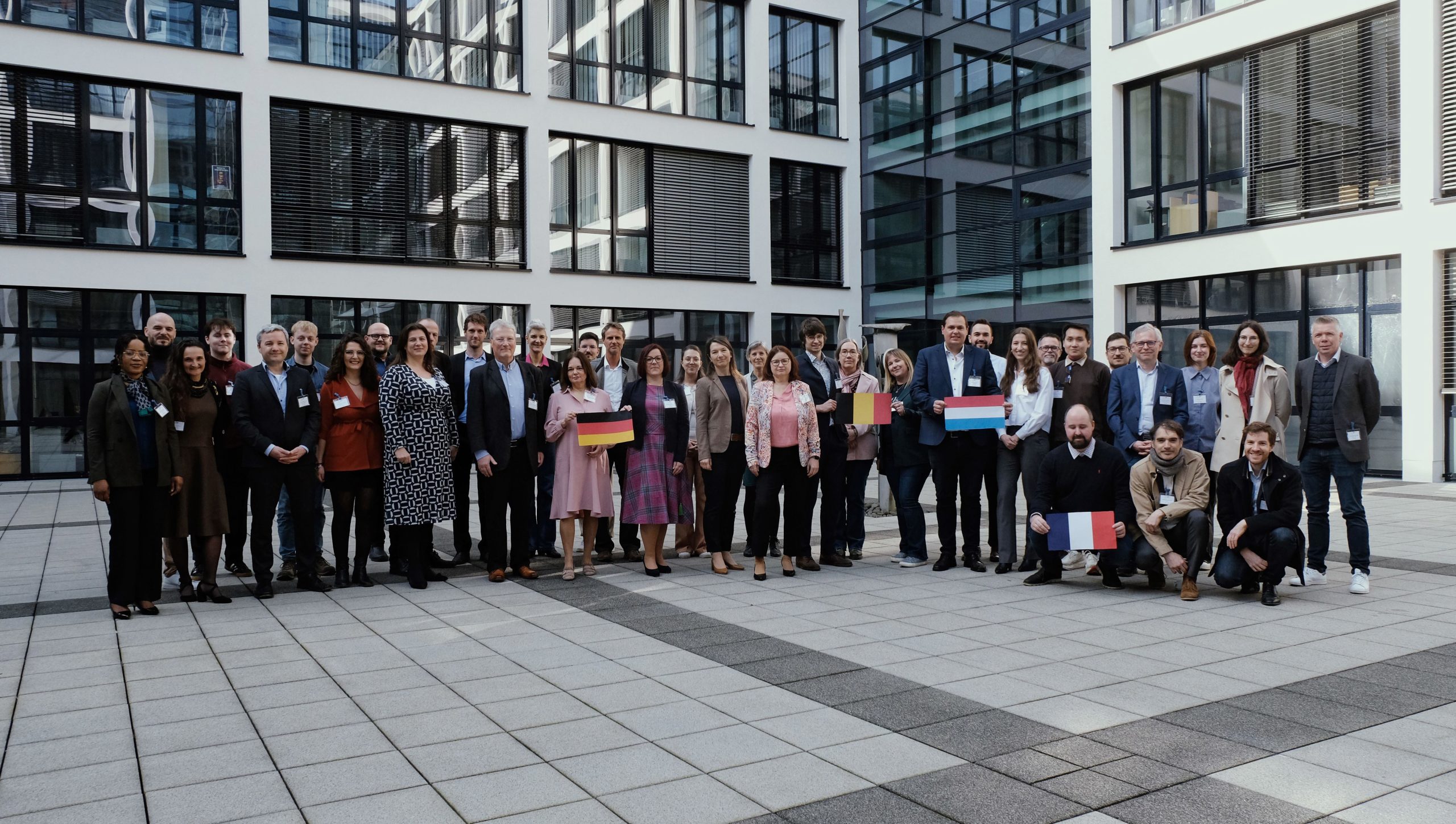
Given the upcoming EU funding approval, a work meeting was held on 9 March with all of the project partners to finalise the details of the collaboration and its focal points, as well as to begin initial project work.
Patrick van Egmond, CEO of LuxMobility: ‘Hydrogen offers hope of a more sustainable future for transport, whilst also safeguarding the strategic autonomy of our Greater Region. With PACT-H2, we are making our vision of sustainable energy tangible.’
Bruno Grandjean, CEO of Pôle Véhicule du Futur: ‘Hydrogen plays an indispensable role in decarbonising our societies. We are looking forward to helping promote acceptance, raise awareness and coordinate public policy as part of the consortium – at a time when local realities are coming under pressure from misinformation and preconceptions.’
Prof. Dr. Michael Vielhaber, Scientific Managing Director of IZES gGmbH: ‘PACT-H2 offers huge opportunities for cross-border research collaborations in the field of hydrogen. We are delighted that IZES is able to contribute its expertise in environmental psychology acceptance and participation research to this pioneering field of study for the Greater Region.’